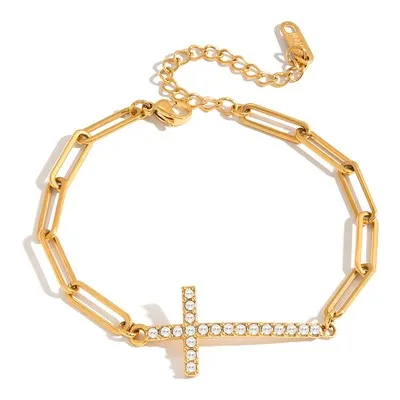

How Pendant Weight Affects Stainless Steel Necklace Construction
Sep 05, 2026
In stainless steel necklace development, pendant weight is more than a design detail. It can influence the choice of chain, bail, jump ring, clasp, and other load-bearing components. Evaluating these elements together helps manufacturers achieve a balance between structural stability, visual proportion, and everyday wearability.
1. Pendant Weight Influences Construction Requirements
A lightweight pendant may work well with a finer chain and smaller connecting components. As pendant weight increases, manufacturers should review whether the chain and connection points are suitable for the additional load.
The goal is not simply to increase component size, but to create a properly matched necklace structure.
2. Connecting Components Should Match the Pendant
The bail, jump ring, connector, and clasp all contribute to the necklace's overall construction. With a heavier pendant, their dimensions, material, and connection methods should be evaluated together.
A well-matched connection system helps keep the pendant stable as the necklace moves during everyday wear.
3. Chain Selection Should Consider Pendant Weight
Chain thickness and construction should be evaluated alongside pendant weight. A delicate chain may create a different visual balance from a medium or heavier chain, even when both are technically functional.
For stainless steel jewelry manufacturing, checking the complete load path-from pendant and bail to jump ring, clasp, and chain-can help identify potential structural issues before sampling or mass production.
FAQ
Does a heavy pendant always need a thicker chain?
Not necessarily. The appropriate specification depends on pendant weight, connection design, chain construction, and intended use.
Which components should manufacturers check?
The pendant, bail, jump rings, connectors, clasp, and chain should be evaluated as one connected system.
Why check pendant weight before sampling?
Early evaluation helps manufacturers select suitable components while maintaining structural stability and visual proportion.